 JB Systems Media and Tech Covering the High-Tech Semi-Electronics-Systems Industries

Designers face new challenges as more components are added to the IoT mix.
By Joe Desposito, Senior Editor
In this second part of our interview with Roman Budek, Product Manager for Power and Lighting Solutions at NXP, we explore some of the some of the promises of IoT LED lighting with regards to incorporating multiple sensors into the design. (For the first part of this interview, see Networking Landscape for IoT LED Lighting.)
IoT ES: Sensors will play an ever expanding role in IoT LED lighting. What kinds of sensors are likely to be incorporated into LED lighting projects?
Budek: Sensors will play a very important role for IoT-based devices. Current occupancy sensors (Infra-red) typically identify that a person or persons walked into the room. They do not identify how many people nor do they identify who actually walked into the room. They can also be prone to misreads from wind gusts, lack of movement, and so forth. However, the identity of the occupant will be required as more advanced IoT lighting features such as color mood lighting, HVAC control, task specific lighting, and other automation controls are added to IoT lighting. Some of the technologies for these applications include cell phone beacons, ISM band radar sensors, gas sensors, RFID chips, and image sensors.
IoT ES: Where do you see cell phone beacons coming into play?
 Budek: Cell phone beacons are ideal for office and commercial locations. In these cases, people tend to carry their cell phones with them to meetings and break rooms. Beacons are detected from either the cell phone modem or another radio modem, such as Bluetooth, inside the cell phone. The user enables the beacon mode on their device when entering the building, and the rest of the IoT occupancy is determined almost passively. As soon as the user enters a room, the beacons are detected and can identify the user. There will be some issues to resolve such as antenna directionality, to assure that the cell phone is in a particular room and not transmitting a stray signal through the wall into an adjacent room. Cell phone beacons can also determine how many people are in the room. For the most part, it is a promising technology for commercial and office spaces.
IoT ES: What about in the home?
Budek: In the home, occupants may not have their cell phone with them in every room. The cell phone might be charging in the kitchen, while the user walks into a bedroom or entertainment area of the home. In these cases, other advanced sensors will have to be used. ISM band radar sensors can characterize how many people have walked into a room. If the RF-signal profiles of the occupants are fairly unique, such as the father is taller and heavier than the son, then this could be a low-cost sensing technology. ISM radar devices are fairly inexpensive, and the RF image processing can be done on reasonable ARM processors to reduce cost and power consumption.
IoT ES: What do you see as the role of RFID tags?
Budek: RFID tags can also be used to identify occupants. Badges are typically designed for low transmission range in order to provide secure access into buildings. A secondary RFID chip, say a UHF chip, could be placed alongside the door access RFID chip. This secondary device would not open secure locations, but would only activate building automation services such as lighting, HVAC, and so forth. These secondary RFID devices have much longer read ranges, can identify occupants, and would not require badge swiping, just the passive actuation of having the badge with you. A combination RFID badge could be relatively low cost and provide both secure building access along with easy-to-use building automation operations. Combination RFID devices would be more ideally suited for industrial and commercial locations.
IoT ES: Why are gas sensors on your list?
Budek: Gas sensors, in the future, will be used for identifying occupancy. Low-cost and low-power devices are being developed to detect CO2 levels in a room. They cannot identify a particular occupant, but they can signal that the room is occupied and also how many people are in the room. This helps in setting the heat load. Since the sensor is detecting the breath of the occupants, it will not falsely actuate from a lack of motion, like occupancy sensors might do. Sensing breath could also potentially be a safety alert device if the occupant in the room stops breathing.
IoT ES: How do you expect image sensors to be used?
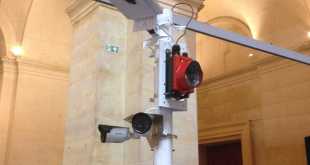
Budek: Image sensors might be one of the best occupancy sensors for both commercial and residential settings. Many security systems are adding motion actuated IP cameras. These security devices are underutilized when the building is occupied with people because they are set up to only identify intruders, which should be quite infrequent. The same device that identifies intruders could be used to identify whether a person walked into the family room or kitchen, for example. Many of the processors in the IP cameras can profile the user and identify male or female, height, and so forth. This profile information can be used by the IoT gateway to classify the room occupant. That classification can be used to identify which family member is in the room and adjust the room parameters to that person’s desired setting.
IoT ES: Once the sensors are determined, what else does the designer need to think about?
Budek: Besides the sensing technology, the IoT developer has to determine distributed versus local architectures and connectivity for the sensing devices. Some occupancy sensors, like IP cameras, are a bit more expensive and might have to monitor several rooms in order to be cost effective. Other sensing technologies, like ISM band radar or gas sensors, are inexpensive enough that several can be placed in one room. In reality, the IoT developer may need a mixture of occupancy sensing technologies.
A passive actuation motion sensor might be placed at several entry points to the room. These sensors can activate sensors, like an IP camera or radar, that will classify and identify the occupant. Multiple gas or radar sensors can be placed in individual cubicles, by sofa couches, and so forth, to completely monitor the room. The gas or radar sensor would keep monitoring the individual to confirm they are still in the room. If the gas or radar sensors do not detect an occupant, then maybe the IP camera turns back on and confirms that no more occupants are in the room before turning off the lights and HVAC. The sensors will be even more important as lighting systems are connected to security, HVAC, and other building automation services.
IoT ES: How will all of these sensing technologies work together with LED lighting?
Budek: If multiple sensors and technologies are used, then some sort of network has to be established to route and activate all of the sensors. If battery powered or moveable sensors are used, then it only makes sense to incorporate wireless technology to transmit data from the sensor. Since the lighting system covers the workspace, then it makes sense to route the room occupancy signals over the lighting network. The lighting network presumably would have been designed to easily accept new devices and reconfigurations, and the sensors would go along with those lights.
The wireless network that controls or activates the sensor requires low bandwidth and easy expansion. If large bandwidth devices, like a full motion IP camera, are present, then a low-power wireless network used in the lighting can activate and control its panning motion. A high-speed data network, like Wi-Fi, could be used to transmit the actual images to the gateway and remote users.
Roman Budek is a Product Manager for Power and Lighting Solutions at NXP
Discover more from JB Systems Media and Tech
Subscribe to get the latest posts sent to your email.
No comments
Pingback: • JB Systems Tech