JB Systems Media and Tech Covering the High-Tech Semi-Electronics-Systems Industries

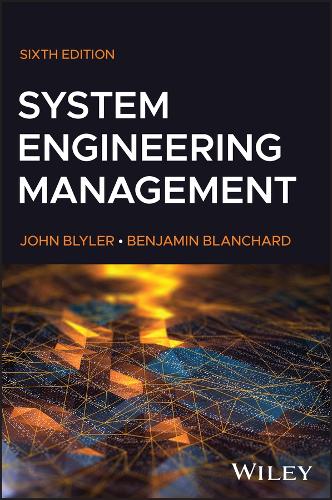
It’s great to see a teaser for the upcoming 6th edition, even if it won’t be available until the end of this year (2025). I’m still happy to accept input from reviewers on various topics as I finish up the work by early summer.
Here’s a quick look at a few key updates coming to the what’s coming SEM 6th Edition:
The engineering of large complex systems is an evolving discipline. System engineers and managers alike must how today’s realities are changing the application of systems engineering thanks to technological advances, shifting resource availability and types, greatly increasing data volumes, new design and implementation strategies, and more.
The latest edition of “Systems Engineering Management” will build upon the successful foundation laid over the past five versions by updating and adding content and examples faced by today’s managers of the systems engineering practice. The impact of new processes, methodologies, and tools will be judged in relation to existing systems engineering management practices to emphasize areas of improvement.
Chief among the updates are the following topics (to be included throughout applicable chapters of the 6th addition and perhaps as a new chapter for one or two of the topics):
1) Modern Supply Chain Management Challenges
Supply chain management has become an important part of the technology development process. Supply chain management, optimization, and modeling are critical in both the design and manufacturing of systems. The supply chain determines which materials and parts can be used in a given design, e.g., EV battery materials. Systems engineering managers should incorporate supply chain awareness and resilience into their work. For example, good data is needed about consumer demands, suppliers’ status, and what’s going on in the marketplace, as well as understanding the health of the supply chain to find the weakest links and reliable secondary sources. This expands the scope of traditional risk analysis.
2) Environmental and Sustainability Engineering Concerns
From an engineering standpoint, green and sustainable designs focus on achieving greater efficiency and effectiveness in terms of energy and usage of materials. Ecological impacts have gained a clearer economic cost – thanks to end-of-life disposal costs, public perceptions, etc. – which means that sustainability must now be considered as an additional constraint on the solution option space for product design. System engineering and management must now consider how they will incorporate wide-reaching environmental, social, and governance (ESG) goals and measurements. System architects must look beyond traditional parameters, namely power, performance, area, and cost (PPAC), to include the environmental impact of their designs.
3) Modeling Trends
The ongoing move to the digitization of the analog world and refinement of sensors and the Internet of things will provide incredible amounts of data for modeling and predictive analysis. Accordingly, Model-base Systems Engineering (MBSE) will increase in importance as will the use of machine learning and artificial intelligence to deal with the data and the systems engineering process. Modeling will also be affected by simulation-driven design, digital twins, remote verification, simulations-emulations-prototyping, the metaverse, and more. Remote learning and cloud-based systems are a result of many of these modeling trends.
4) New Terminology and Concepts
Transdisciplinary Systems Engineering (TSE) addresses disciplinary convergence and technological advances that add further complexities to the development process. TSE has been enabled by the growing convergence of engineering with other disciplines and promises to achieve advances in both the thinking and the methods needed to address complex sociotechnical system problems. This trend will bring changes to the way in which system-engineered projects are managed, for example, the engineering of leading-edge science-dominated prototype systems (like quantum computing).
Note: The goal is not to add new terms to the systems engineering vocabulary. Indeed, TSE may only have value at a systems engineering conference (like INCOSE) or as an academic question. But, if nothing else, presenting this topic of TSE will help demonstrate the challenge of defining systems engineer.
5) Resilient (Reliable) Systems
Resilient systems are adding a new dimension to the traditional ‘ilities’ requirements, namely, reliability, availability, maintainability, and supportability (RAMS). Managing the development of system-wide resilience is an evolving process needed to incorporate resilience into complex systems. Additionally, part of the reliability update should include a discussion on how recent reliability and reuse of modern space systems like SpaceX (versus Boeing/Nasa projects involving the latest launch and Starliner vehicle) have changed the system systems engineers manage reliability – instead of simply adding more redundant systems. The reuse of rockets and spacecraft will also be part of a logistical discussion. One reason for the high reliability of SpaceX vehicles could be the rise of IoT sensor systems and real-time monitoring to detect when reliability has been compromised. Maintaining high reliability while reducing redundancy would potentially save on weight, cost, etc. (Recall the X-29 had three backup/redundant batteries, etc. These added a lot of weight and other problems.) Modern commercial aircraft are using IoT technology to achieve similar high reliability. Although my book is on systems engineering management, one of its strengths is that it includes decisions on reliability, maintainability, and the like which are often missing in similar works.
6) Data-Driven Decision Making and Risk Management
Data-Driven Decision Making is the latest evolution of the decision process that managers must face. Data-driven decision-making (DDDM) uses facts, metrics, and data to guide strategic business decisions that align with your goals, objectives, and initiatives. The enormous growth in the availability of data from various sources has enabled the large-scale adoption of data-driven decision-making. One component of DDDM is data-driven analysis, which is sometimes called the fuzzy Delphi method in its hybrid form. DDDM has been applied to sustainable supply chain management, among other areas.
7) Recycling and Reuse of Complex Systems
End-of-Life phase is often known as the forgotten phase of the system lifecycle. But the scarcity of resources, overall sustainability, and environmental concerns have brought new attention to the recycling, reuse, and decommissioning of all systems. The end-of-live activities now have a direct impact on the initial design of many complex systems. Management of these requirements is an important part of systems engineering. As an example, military systems now provide education and training on, “Diminishing Manufacturing Sources and Material Shortages (DMSMS) and provisioning
Discover more from JB Systems Media and Tech
Subscribe to get the latest posts sent to your email.