 JB Systems Media and Tech Covering the High-Tech Semi-Electronics-Systems Industries
by Hamilton Carter Senior Ediotr Technology jobs in politics appear to be better gender balanced than technology jobs in general. Connectivity’s Chris Nehls’ says: “But many women sketch a very different picture of the political technology sector here in Washington. While politics certainly has its own glass ceilings, the joining of two industries long dominated by men – politics and …
Read More »Monthly Archives: November 2014
IP Systems Embedded Blog Review – Friday November 21, 2014
by Hamilton Carter, Senior Editor Part 3 of the Specman reflection API blogs from Cadence is out. Once again, if you like building meta-tools, this API is for you! For example, want to build a memory profiler with functionality not built into the tool? The power lies within the reflection API. Linda Qian of Intel briefs us on Intel’s …
Read More »Handbook Employs User Experiences for Success

A popular Japanese sales application gains traction in North America by engaging technical design and business teams with tablet-based, end user focused tools.
Read More »IP Systems Blog Review – Friday November 11, 2014
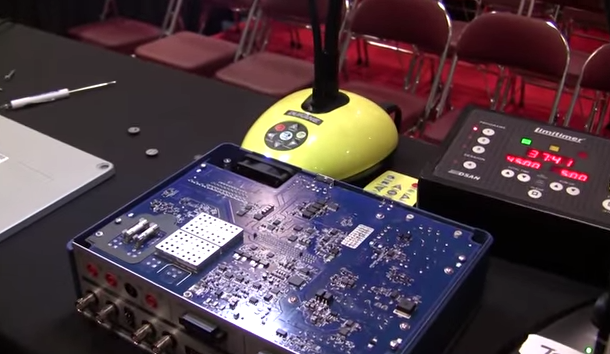
by Hamilton Carter, Senior Editor The first post-acquisition Jasper User Group (JUG) conference was heldlast Monday and Tuesday in Santa Clara California. Cadence’s Executive Vice President of the System and Verification Group, Charlie Huang, and Jasper’s Oz Levia each spoke about how the new Jasper products fit into the Cadence system verification flow. Ron Wilson, of Altera discusses …
Read More »IoT Embedded Blog Review – Monday, Nov. 17 2014

Industrial IoT Growth; Rethink Agile; Ex-Nokians Crowdfund; Money from IoT; Smart Furniture; Customized Software; Standards; and Thingsee One
Read More »Review of Jama, ARM Techcon and TSMC OIP Shows
Three events from TSMC, ARM and JAMA Software highlight the breadth and depth of IP development that (hopefully) results in manual-less consumer apps.
Read More »IoT Embedded Systems – Nov. 12, 2014
IoT Embedded Systems Newsletter webversion | unsubscribe | update profile Analog and Sensors; Hardware-Software Collision; IoT Granularity; Data Services; Software Copyrights, Business Needs; Verification; Crypto IP, IoT Review; Decoupling Welcome to the inaugural issue of “IOT Embedded System” for hardware and software platform developers. Please subscribe with your email address to continue receiving this content! Analog, Sensors and …
Read More »The System Lifecycle
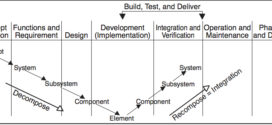
By John Blyler, Affiliate Professor, PSU A life cycle is the series of stages that a system passes through during its lifetime. Ideally, these stages are sequential, starting with the conception of the system, continuing through the design, development, integration, and operation, and ending, finally, with its phaseout. In practice, most phases overlap one another, with the next phase beginning …
Read More »IoT Embedded Blog Review – Monday, Nov. 10, 2014

IoT Hype; Growth Patters; Developers Needed; Tiered Apps; Social Justice; UX for IoT; In-Vehicle; Healthcare; Software Approaches
Read More »The Internet of Things (IoT) offers Granular Monitoring and Control

Gartner Research analyst Stephan Ohr looks at the outrageous proliferation of monitoring and control devices enabled by the IoT technology.
Read More »